Parent Avenue: A Neighbourhood Street We All Drive On
Xsander Moisenko for Ward 4 Here is another update on my roads report for Ward 4. As I've mentioned in previous blog posts, I not only drive on these streets but also ride them daily on my Ebike, so road conditions are crucial to me. I'm aware of the damage rough roads can cause to a vehicle and the impact they have on my bike. We shouldn't have to endure such deteriorating infrastructure.
Parent Avenue is a residential street. It runs between Tecumseh Road and Ottawa Street, and it does the job a neighbourhood street is supposed to do — it carries people home, it carries kids to school, and it carries neighbours out to the rest of the city.
It is also being asked to do a second job: as a shortcut. Drivers cut through on their way between the Tecumseh Road and the Wyandotte, Erie and Ottawa Street corridors. Most of that traffic does not live here. It just passes through.
That is not a complaint about people driving. It is a question about what we expect a residential street to absorb. When a street built for local traffic is carrying commuter traffic, the street and the people on it pay for it.
What we see
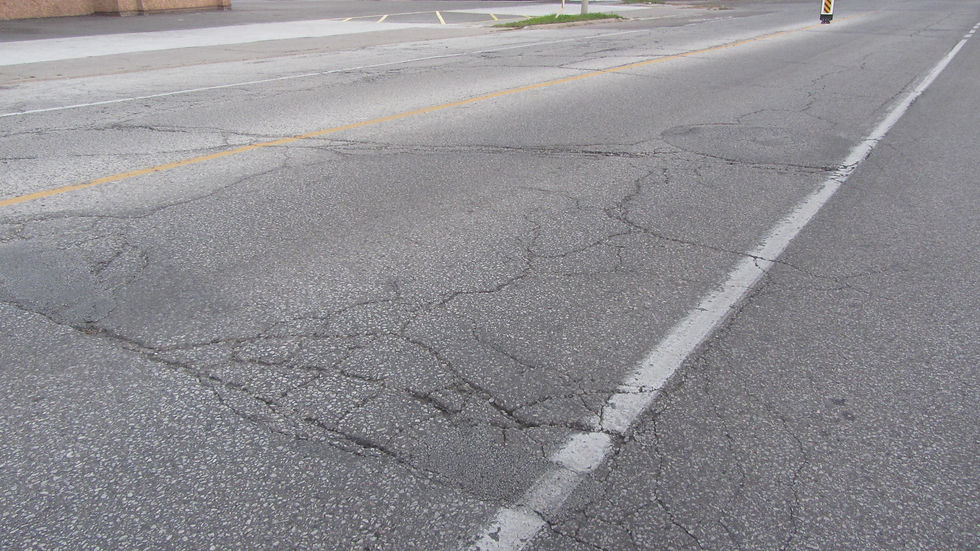
These are our own photographs of Parent Avenue. They are not a City assessment. They are what neighbours see every day.




The two things residents keep raising
One: the condition of the road. The photos above show cracked and patched asphalt — the kind of surface that is rough to drive on and worse to bike on. When you ride a bike, you feel every seam. When you drive, you feel every patch. And once water gets into that cracking, it does not get better on its own. It gets more expensive.
Two: speed and cut-through traffic. On a residential street, speed matters more than it does on an arterial road, because the people standing on the boulevard, walking to the bus, or getting out of a car are neighbours. This is a concern residents have raised repeatedly, and it is the reason traffic calming keeps coming up.
We fund these roads, so we should be able to drive, walk, and bike on them without worrying about the next rough patch or a car speeding at 70 in a 50 zone.
What the City already says it is doing
This is not a neighbourhood asking for something the City has never considered. Three things are on the record.
The City has adopted a Vision Zero Action Plan. Windsor council approved the plan in January, with 42 initiatives and a stated goal of zero fatal and major injury collisions within 15 years of adoption. (CTV News Windsor, November 21, 2024)
Demand for traffic calming has surged. City administration reported to the Environment, Transportation and Public Safety Standing Committee that traffic calming requests averaged about 90 per year between 2015 and 2019, then jumped to about 374 per year between 2021 and 2025. Council has been reviewing an updated, more data-driven policy. (AM800 CKLW, December 1, 2025)
There is an established route for a resident to start this. Service requests for a neighbourhood Traffic Calming Study may be initiated through 311. The City then does a speed analysis of the road, and residents within the study area are polled through the City's 311 Call Centre to identify support for the proposed measures. In the City's own published process, the survey requires 51 per cent support from nearby residents before a measure is officially approved. (City of Windsor, Totten Street — Next Steps)
What we are asking for
Not a promise of a specific device on a specific date. A proper look, in the open:
Ask the City to assess Parent Avenue between Tecumseh Road and Ottawa Street — surface condition, traffic volumes, and observed speeds.
Put the basics first. Roads, sidewalks and drains. Fixing the surface is the foundation; nothing else works on a failing road.
Evaluate speed and cut-through traffic, and determine whether traffic calming measures are warranted on this stretch.
Report back to residents — tell the people who live here what the data says and what the plan is.
If you live here or drive here, the process starts with you
A traffic calming study begins with a request. That request can come from a resident. If Parent Avenue is part of your day, file a service request with the City through 311 and describe what you see — the surface, the speed, and the cut-through traffic. Volume is what moves these files.
Then hold your council representative to the answer.
Xsander Moisenko for Ward 4
Let's fix what we drive on.
Sources
City of Windsor — Vision Zero Action Plan approved January; 42 initiatives; goal of zero fatal and major injury collisions within 15 years of adoption. Reported by CTV News Windsor, November 21, 2024. ctvnews.ca
Traffic calming requests rising from about 90 per year (2015–2019) to about 374 per year (2021–2025); policy review before council. AM800 CKLW, December 1, 2025. am800cklw.com
Neighbourhood Traffic Calming Study initiated through 311; speed analysis; resident poll through the 311 Call Centre; 51 per cent support threshold. City of Windsor — Totten Street, Next Steps. citywindsor.ca
General City of Windsor council information: citywindsor.ca/mayor-and-council
Note on sourcing
The road-condition and traffic descriptions in this post are campaign and community observations, illustrated by the campaign's own photographs. They are not City measurements, and no Parent Avenue-specific City study, traffic count or speed survey was found in the sources checked. The City citations above establish what the City has said and done citywide and how the traffic calming process works — not a finding about Parent Avenue. If the City's data for this stretch becomes available, the specific numbers should replace these descriptions.


Comments