The Community Recovery Village: A Fiscally Responsible Solution for Windsor
Updated: 4 days ago

The Community Recovery Village: A Fiscally Responsible Solution for Windsor
Municipal leadership requires tough choices, strict fiscal discipline, and a focus on measurable outcomes. Windsor stands at a critical junction regarding public safety, homelessness, and capital allocation. City Council is currently weighing a proposal to convert the historic Windsor Arena into supportive housing at an estimated capital cost between $60 million and $100 million.
While the intent to address street homelessness is necessary, the execution must make financial sense. Sinking up to nine figures into a century-old brick shell is an inefficient use of public funds. A far better alternative exists: the Community Recovery Village. By utilizing modular, cost-effective infrastructure on industrial land, Windsor can provide real treatment, secure our neighborhoods, and protect the public purse.
The Fiscal Reality: A Clear Comparison
To understand why the arena project fails the basic test of fiscal responsibility, one only needs to look at the numbers.
Project Metric Windsor Arena Conversion Modular Recovery Village

The data makes the choice obvious. The modular village delivers four times the capacity at a fraction of the capital cost, coming in at less than one third of the arena project even at its lowest estimate.
The arena conversion is a wasteful boondoggle. Spending between $600,000 and an astonishing $1,000,000 per bed simply to build shelter space is indefensible when modular construction achieves the same baseline shelter for $45,000 per bed. Even worse, the arena leaves the city facing operating costs that staff have not yet estimated (Ward 1 Councillor Fred Francis cites about $4.6 million a year at the Minnesota model it is based on)to support only 100 individuals. It spends far more money to help far fewer people, all while leaving the vast majority of our unhoused population on the streets.
In contrast, the modular village delivers a predictable, scalable, and dramatically lower-cost operating model at $12,500 per bed annually. It is the only option on the table that respects taxpayer dollars.
Scalable Design and Comprehensive Care
The Community Recovery Village relies on durable, repurposed shipping containers stacked two high. Each modular block is divided into dual-occupancy units, housing 16 residents per structure. This approach eliminates the lengthy delays, structural unknowns, and inevitable budget overruns that come with retrofitting a 1920s arena.
Crucially, the village is designed as a fully enclosed, highly secure campus. Recovery cannot occur in a chaotic environment. The facility will centralize essential support systems inside its perimeter, including:
Dedicated medical and psychiatric triage
Intensive addiction treatment and detox support
Educational and vocational classrooms
Physical fitness and structured recreation areas
By centralizing these services, the city eliminates the fragmented, unaccountable spending often scattered across disconnected programs.
Economic Revitalization for the Core
Location is as critical as design. Converting the Windsor Arena keeps a high-acuity crisis center right against our urban core and established residential neighborhoods. This approach directly conflicts with downtown revitalization. Small businesses, restaurants, and retail corridors cannot thrive when public spaces are dominated by open drug use, disorder, and safety concerns.
Placing the Community Recovery Village on appropriately zoned industrial or commercial land minimizes disruption to residential neighborhoods. It removes the open-air illicit drug market from commercial streets, allowing downtown foot traffic to rebound and property values to stabilize. This setup gives the surrounding business community the security required to invest, while providing individuals in crisis with an orderly environment focused entirely on rehabilitation away from street temptations.
The Missing Tool: Legislative Reform
Physical infrastructure is only half of the equation. To break the cycle of street homelessness permanently, municipal efforts must be paired with legislative reform at higher levels of government.
Currently, municipalities are forced to manage an endless cycle of emergency room visits, petty crime, and short-term incarceration that cures nothing. Windsor City Council must join other forward-thinking municipalities to lobby provincial and federal leaders for expanded civil commitment powers.
When severe addiction or untreated psychiatric disorders leave individuals entirely unable to care for themselves, involuntary treatment is the only compassionate, orderly response. We must prioritize structured recovery over the revolving door of incarceration. Secured modular villages provide the dignified, fully equipped facilities needed to execute this approach effectively once the legal framework is modernized.
Moving Forward
Windsor cannot afford to pour $60 million to $100 million into a single legacy building that leaves three-quarters of the problem unaddressed.
As a community, we should reject the arena boondoggle and pursue a 400-bed Community Recovery Village. It is secure, scalable, compassionate, and fiscally sound.
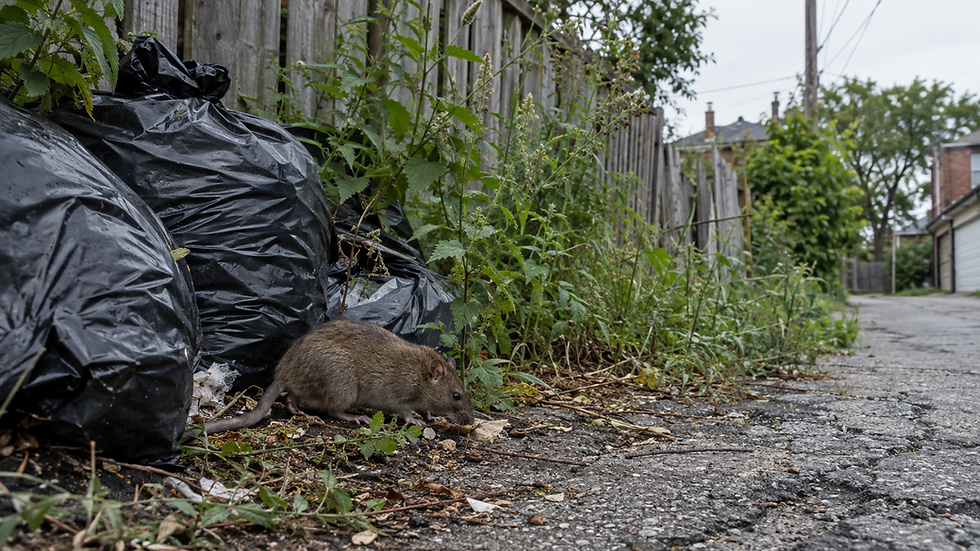
(The images shown above are conceptual and generated by AI.)


Comments